I’m a big believer in the saying, by Paulo Coelho, that ‘Travel is never a matter of money but of courage’. It takes, of course money, but also a lot of courage to travel alone and initially I didn’t want to. It was 2011, I had recently returned to Japan after the earthquake and we had a break coming up, The plan was to travel to Cambodia with Christian but I didn’t have enough time left in my passport to get the visa, and I wouldn’t be getting a new passport until returning to New Zealand in August. So, I decided to travel to places in Japan that I’d been wanting to go to. Osaka, the island of Okinawa, and the cultural hotspot of Nikko. I fortunately knew a great travel agent who helped me with booking the flights and trains I’d need to take on the trip.
When I was 16 years old I had spent a year on exchange in a high school in Osaka, I would be catching up with an old host-sister and seeing the sights of Osaka again. In Okinawa I wanted to visit the famous red castle and enjoy relaxing on a tropical island, and in Nikko it would be all about the food and culture, especially anything to do with Yuba which I’ll explain later.
I started my trip by making the best decision ever, to stay at CaminoRo Guesthouse in Shin-Osaka, which, unfortunately, is no longer in business, run by a lovely Japanese couple. The first evening I pretty much had the place to myself as I made dinner and watched the Royal Wedding (William and Kate’s). The next day I declared it a no rush, no stress, do what I want, sort of day so I read for four hours (bliss!) then went out to explore the city. I revisited a lot of places and relived a whole year with my host sister as we walked around the zoo. Reconnecting with people while traveling is awesome, as is making new friends, whom I met at the places I stayed.
(Photos: Osaka Castle, the Glico running man in Dotombori Canal district, and Osaka Tennoji Zoo)
Next up was Okinawa, the furthest south I’d ever been in Japan. I had no idea what I was in for but I knew I wanted some beach time in there somewhere! As I said earlier, I made some new friends at the hostel in Naha, the capital city, and I joined them for a beach day and some night-time sightseeing. I also made sure I had some time to explore on my own. Being free to choose how your day will go is half the fun of traveling alone. Naha was beautiful and I enjoyed learning more about a different side of the Japanese culture. They definitely live by island time, which made it very relaxing to be there! If you’re ever in Okinawa make sure to walk down Kokusai Dori or visit the gardens, which are beautiful. Watch out for the Habu snakes, which they like to turn into sake!
(Photos: The Gardens, Habu Snake Sake, Okinawa Shiri Castle, a meal with hostel friends)
I had a great time in Okinawa but I still had one more stop to make before heading home. Nikko, a historical place where culture meets nature. Nikko is the doorway to the Nikko national park where you’ll find Toshogu, a shrine, and the mausoleum of Tokugawa Ieyasu, who I’d learnt about in history classes when I was 16. I felt quieter while in Nikko, I kept mostly to myself and enjoyed the cooler temperatures of the surrounding forests. Another thing to enjoy in Nikko is Yuba! It may not sound delicious once you know what it is, but trust me, I had to restrain myself from buying all the yuba treats I could! Yuba is basically tofu skin which is made by skimming the film off the top of boiling soy milk, then dried. If you like tofu, you’re sure to like this as well!
(Photos: Rice paddies on the way to Nikko, cultural sites of Nikko, in and around the National park, Yuba pudding and Fried Nikko Yuba Manju, with red bean paste)
Well, there we have it, I had stepped out of my comfort zone and completed my solo adventures, brought to you by the letter ‘O’ where I learned to be happy traveling alone, met crazy, weird, and wonderful people, and did what I felt like! If you have the chance, be brave, and venture out into the wild by yourself. This experience has definitely shown me that I am capable of anything and given me an appreciation of traveling and sharing experiences with the people I love. It’s ok to be alone sometimes too, though!
Brunei update #2
Life in Brunei is chugging along nicely, I’ve joined a writers’ group which I’m really excited about. Our second meeting is next week, I’m looking forward to bouncing ideas off everyone. The house is feeling more like a home, we’ve put frames on the walls, bought a car, and we’re getting the guest bedroom ready for when my parents visit in September. I’ve also been applying to some online teaching jobs and have my first interview this week, fingers crossed for that! In the mean time I’m excited for this Wednesday! We have a long weekend coming up so we’re visiting the nearby island of Labuan, where I’m doing a yoga retreat for 3 days. I’m happy I’ll have some family time there too.
That’s all for now. Thanks for reading, and as always, enjoy the adventure!
Brrrr! The coldest spring break I’ve had in a while! We’re almost finished with our time in Quebec. It’s beautiful here, despite the cold I’ve enjoyed being with family. We usually visit in the warmer months so it was fun to see a different side of the city.
I’m looking forward to going home to Brunei as well, though, especially for the temperature! I’ve started a check list of all the things that I want to do when we get back so I’m excited about getting that started. You know how much I love a good list!
I’ll leave you with some of my favourite photos of our time here. As always I have more blog posts planned, so stayed tuned! Enjoy the adventure!
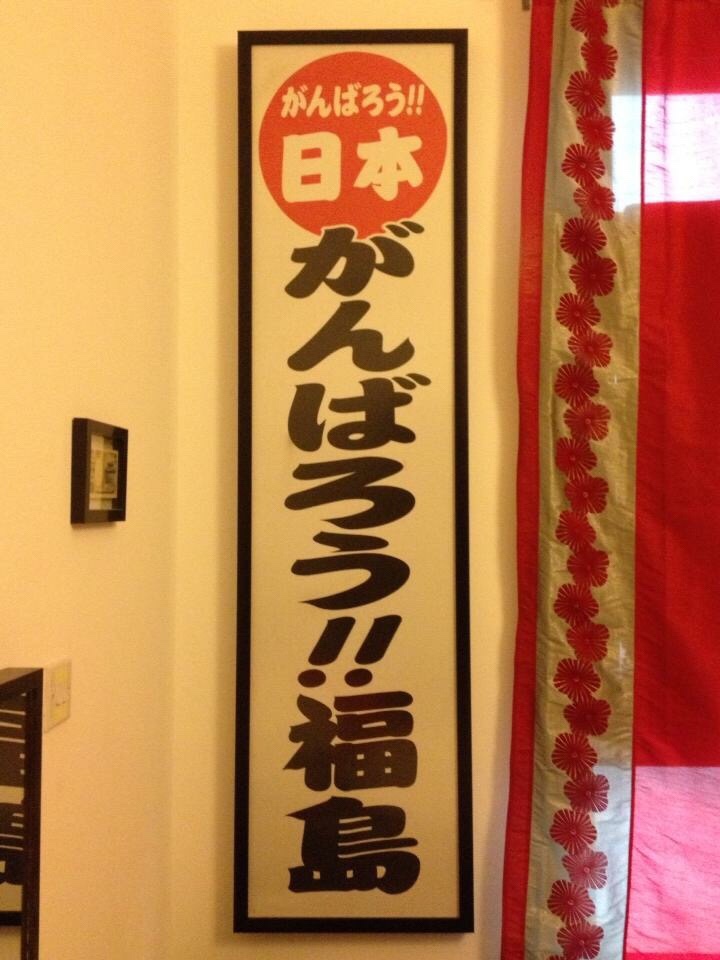
From 2009 to 2011 I lived in Iwaki city, Fukushima, Japan as an assistant language teacher (ALT) for the JET (Japan Exchange and Teaching) Program. Seven years ago, to the day I lived through the Tohoku earthquake and tsunami that hit Japan. It has taken a long time to come to terms with what happened. Living when so many people lost everything including their lives was the hardest thing, I felt so guilty for being safe. In tribute to the wonderful people of Japan and the beautiful prefecture of Fukushima I want to tell my story of that time…
A gorgeous Japanese spring day
It was a Friday. Imagine, if you will, a beautifully calm spring day. The skies were clear, the sun warm, and cherry blossom flowers were floating in the air. I had been let out of work early after watching my junior high students graduate. My plan for the weekend was to relax in town, have lunch, then catch the 4:05 bus to visit my fiancé, Christian. My bag was packed, I didn’t need to go home. Over lunch my friends and I were texting each other about the logistics of our weekend. You see, we were planning a fundraiser for Christchurch after their earthquake, on February 22nd, a little too close to home for my liking. I obviously had no idea at the time that I was about to experience a record breaking 9.0 earthquake myself.
Well, at least not until a few seconds before 2:46pm on a gorgeous Japanese spring day when my cellphone earthquake alarm went off, along with all the other cellphones in the café.
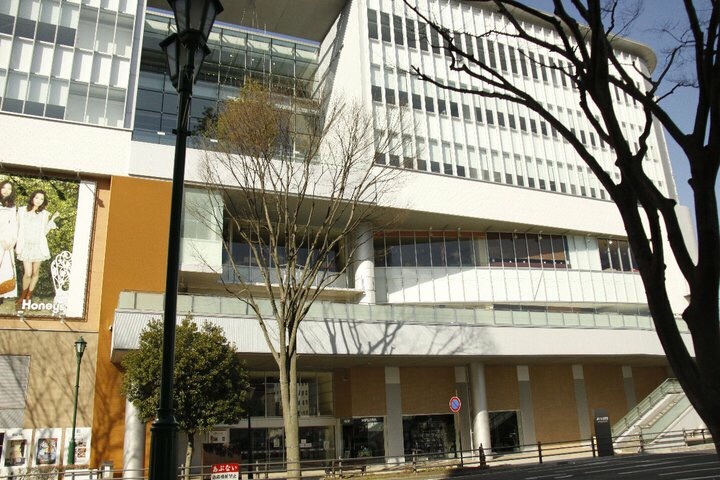
I could hear the earthquake coming, like an out of control locomotive, and even with the warning, nothing could have prepared me for over five minutes of shaking, and for what was to come after. It just wouldn’t stop! I could hear screaming and things breaking in the department store. I could also see the balcony and the building I was in sway and shake independently from each other. I was on the 1st floor of an 11-story building and I honestly thought I wasn’t going to make it out. I had taken cover under the narrow bench I’d been sitting at and I could see kids outside jump up and down on the balcony. They quickly realized it wasn’t a safe place to be and ran away. Thankfully the Japanese building codes are very strict. I was alright but I knew I had to get outside. After everyone quietly paid for their lunch (!) I went across the street to the big open space of the taxi stand and sat on the ground with dozens of strangers. I was able to send one message to my family before the network crashed; ‘I’m O.K’.
Building I was having lunch in when the earthquake hit
I knew I needed to make a plan. I felt that being from New Zealand and having had experienced earthquakes before there were things I could do to help my situation, so I began to make my way back to my apartment. That meant getting my bike, from underneath the building I’d just come from. After convincing the security guard that I’d be quick I was on my way. I had never moved that fast before! Remember that gorgeous Japanese spring day I mentioned? On my way home, the clouds rolled in; it got cold, and snow began to fall. Then, the tsunami alarm went off.
I was too far inland to be affected but it was scary nevertheless. I wouldn’t find out until later but two fellow assistant language teachers died in the tsunami in the prefecture to the north, along with countless others. I still can’t watch any footage of the tsunami without feeling guilt that I survived but so many others didn’t.
Once I got home I went into auto-pilot. I repacked my bag with functional clothes, filled my bathtub so I could flush my toilet and wash and packed another bag with my passport and as much water and money as I could find. Then I went to check on my friends. For the next few days we banded together, pooled our supplies of food and water, and watched with horror and disbelief as the news reported failure and the eventual shutdown of the nuclear power plant 40km north of our town.
During this time the roads and railways shut down, getting out seemed unlikely if not impossible. This caused no end of stress for my family, and at the time I didn’t understand why. I was safe, I just didn’t have the ability to leave.
While my friends and I waited for the roads to reopen we had to take care of ourselves. No one spent the night alone. We kept busy and took care of each other. A couple of days after the earthquake it was my turn to get more food. I went to the supermarket and it was the most surreal experience! By that time the supply was low so they were only letting a certain number of people in at a time. Everyone else waited their turn in a line outside. I clearly remember waiting in that line and feeling comfort and strength from the people around me. No one was pushing or shouting, everyone respected their place in the line. It was exactly what I needed at the time. I wondered if people in other countries would be so calm.
Pooling supplies
Water supplies
Line for supermarket
A few days later the roads reopened, this turned into a mass exodus of my friends and I. In the days leading up to this we had all been making plans. Where we would go, where we would stay. All I wanted to do was to get to Christian and make a plan together. Usually it would only take a 2-hour bus ride and a quick taxi trip to get to him but circumstances had obviously changed. It ended up taking me 3 buses, a taxi, and about 7 hours to reach his place. Once I finally arrived I gave him the biggest hug I could and said “Sorry I’m late”. Proof that I hadn’t completely lost my sense of humour! From there I contacted other kiwi friends and got some information on how to get to Tokyo. Christian had a job interview in Vancouver so we decided that I’d fly there as well. He already had his ticket and I was able to get the last seat on a flight to Canada, arriving in Vancouver 20 minutes after him. That was the easy part, we still had to get down to Tokyo.
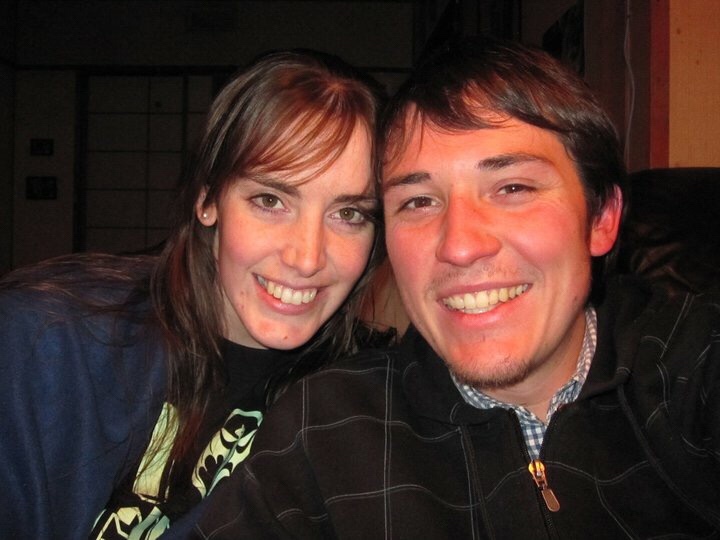
Late but together again
I contacted the New Zealand embassy and they agreed to let Christian and I hop a ride in a van heading south. This, again, took much longer than usual as they were doing a supply drop to Sendai, in the prefecture to the north. We finally made it to Tokyo. It was a bizarre feeling arriving into Shinjuku in the dark. Not only because it was night time but because there were no neon lights flashing. All extra power was being sent north to compensate for the plant failure. It was also strange to find that the convenience stores were running low on everything. It seemed that everyone had felt the need to stock up. That night we enjoyed our first proper meal in a week, Indian takeout, on the bed of our hotel room.
Convenience store in Tokyo
Indian takeout on the hotel bed
After saying goodbye to Christian at the airport the next day I was struck with an enormous wave of emotions as I waited for my flight. It would take me months to work through them but it was mostly a heavy sense of guilt because 1) I had survived and 2) I had the luxury of leaving. I knew at that moment that I had to come back, not only to finish my contract but to find some peace of mind that I’d done all that I could do to help. At that stage we were only going to Canada for a week, we ended up staying three weeks.
I had been in contact with my supervisors the entire time I was away and everyone was so generous about giving my colleagues and I the time we needed to get back, or to decide that we weren’t coming back. In Japan foreigners are called ‘Gaijin’ (other/outside people), during this time though we were called ‘Flyjin’ because so many of us left Japan. I was worried that I would be judged for leaving but the first day I went back to my school the principal shook my hand and, with tears in his eyes, thanked me for returning. I felt more judgement from some of my own ALT colleagues who decided that they weren’t leaving at all. I respect those who stayed, it just wasn’t something I could do if I wanted to give my family some peace of mind as well. I had already told my parents that, in no uncertain terms, I would be returning to Japan, they just needed me to let some time pass before I did.
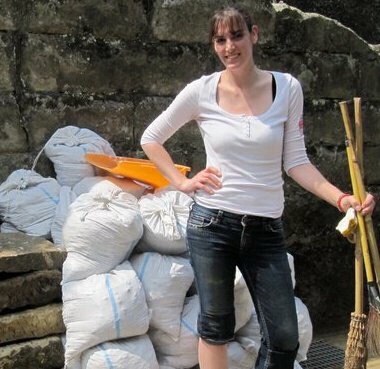
Volunteering
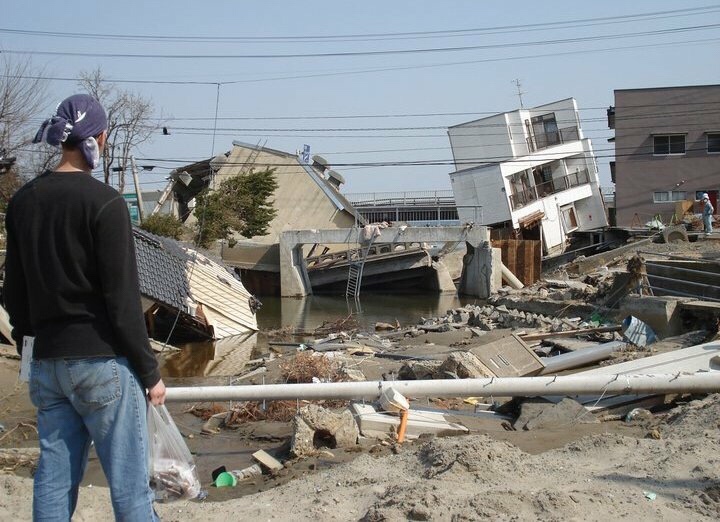
Between returning to Japan and the end of my contract in August I, along with all the other ALT’s in my prefecture, volunteered to help the locals clean up. The one day that sticks out vividly in my memory was when a group of us went to the coast and went door to door asking if there was anything we could do to help. A family took us up on the offer and one of my friends and I spent the day shoveling sand out of their backyard. The tsunami had come right up to their house, you could still see the line of sand and silt half way up the windows. Their garden had been completely destroyed. We ended up clearing over 100 bags of sand that day. After leaving that afternoon we were faced with the most heart shattering view I have ever seen.
Devastation
Another group of my friends began volunteering and they also created a non-profit charity organization called Eyes for Fukushima. They all did some amazing work and raised money through the sale of t-shirts, fundraisers, and events. They also raised money for other areas of Japan. If you’d like to find out more information please visit https://www.facebook.com/EyesForFukushima.
For other groups that are still actively helping in Fukushima please check out:
After returning to New Zealand when my contract ended I was having a difficult time processing everything that happened to me. I wasn’t able to talk about it without getting angry or sad. It was frustrating not being able to express how I felt especially while it seemed that’s what anyone ever wanted to talk to me about. Eventually I opened up and spoke to family and friends about the experiences and guilt that I had. Looking back, it’s important to not close yourself off after such an event. A few years ago, my Dad gave me a book called The Unthinkable. It took me a long time to bring myself to read it but it really helped me to work through my behaviour after the earthquake. It also taught me how important it is to be prepared, as corny as that sounds, it’s just practical. If you’d like to read the book visit http://www.amandaripley.com/books/the-unthinkable. The New Zealand civil defense has a great site that helps anyone prepare their home and family to get through a natural disaster, http://getthru.govt.nz/.
In the end I’ve learnt to live my life and be grateful and so thankful for the moments and the experiences and the people we share this planet with. It’s not a matter of ‘if’ an earthquake or other natural disaster will happen, it’s a case of ‘when’ it will happen. Being prepared is the least anyone can do. In times like these it’s the people who matter the most, get to know your neighbors, smile at people, be kind. Live your life!
If you got this far, thank you for reading! Fukushima, Japan, the people who live there and all the friends I made have a special place in my heart. If you ever get the chance please visit Fukushima, it is a beautiful place and the people there make it even better!






 32andCounting